HVAC
Service vans with compressors, ladders, filters, and refrigerant logs.
Keep seasonal PM, high-mileage vehicles, and inventory restock visible before the busy months hit.
- Filter bins
- PM checklist
- Refrigerant docs
Working foundations, security checks, protected launch gates, and later roadmap items are labeled separately so the site stays concrete and credible.
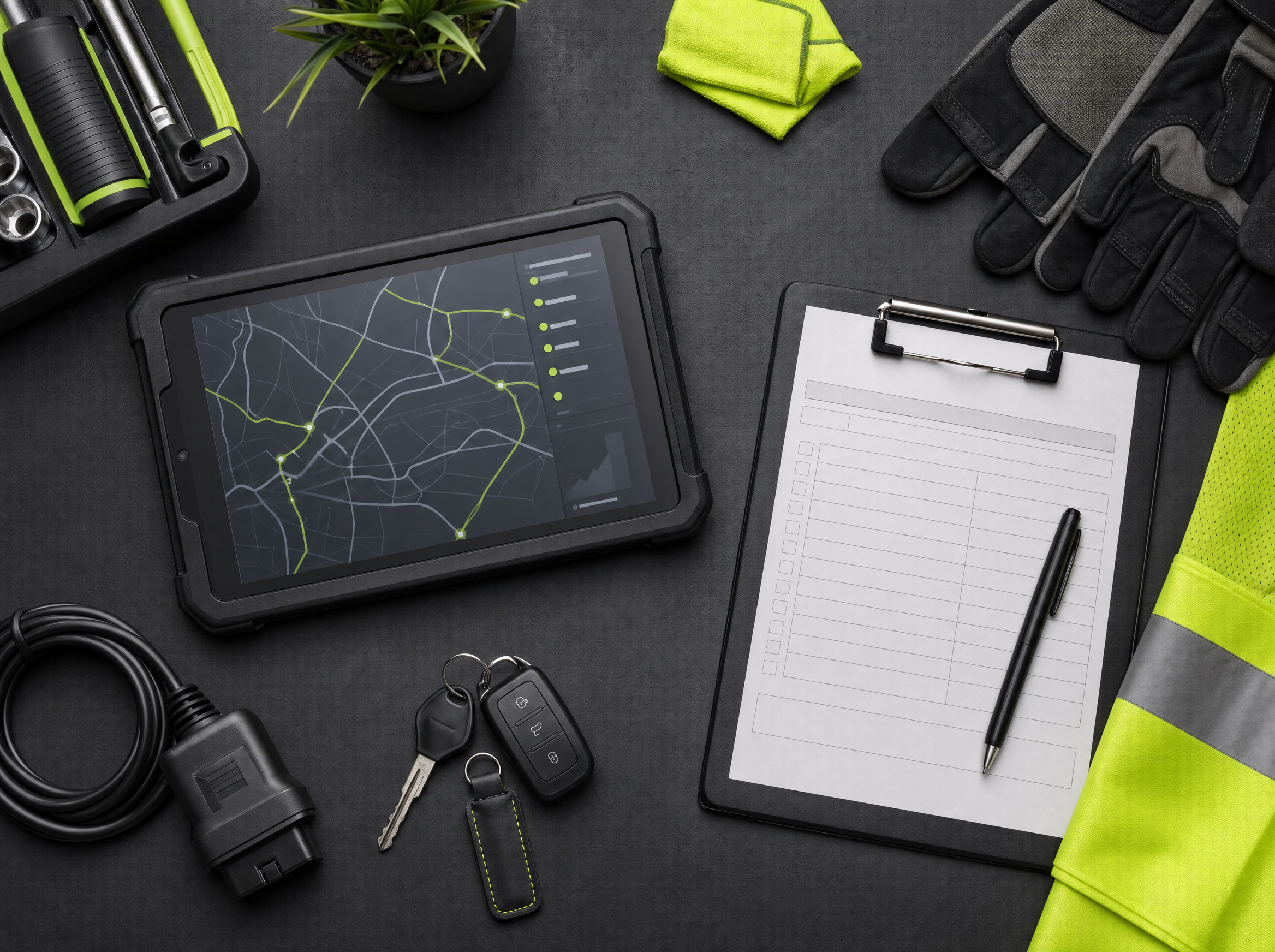
The mobile foundation now includes an encrypted, API-origin and tenant/user-scoped local-store lifecycle with retirement tombstones, key-loss recovery, fail-closed transitions, and serialized session/database changes. Connector authority, replicated reads, queued writes, conflict UI, and the airplane-mode soak test still need validation before public launch.
Manual records and provider-neutral VIN decoding with a review-before-apply flow work on web and mobile without a sensor or dongle. Photo-assisted odometer capture remains launch work; OBD2 support is optional and still needs physical adapter validation.
Web and mobile vehicle lists support archive and restore, server-side active/inactive/retired status filters, and bounded driver-assignment history. Offline lifecycle convergence, full driver profiles, documents and media, imports, and custom fields remain follow-up work.
Owners and admins can list, create, and review DVIR-style and annual DOT templates with durable, retry-safe creation. The glove-friendly field runner, photos, and offline completion remain protected launch work.
A focused session maps your fleet and current workflow to the build. Spreadsheet import is still a launch requirement, so pilot timing and data setup are confirmed before onboarding begins.
Custom fields and complete CSV or JSON exports are planned but not finished. PDF output, public API credentials, and accounting connectors follow later gates.
The pricing direction is per vehicle without an enterprise-style minimum. Final packaging is being validated and will be confirmed before any paid commitment.
The current product serves a generated OpenAPI contract for its implemented routes, including durable tenant-scoped idempotency for inspection-template creation. Partner tokens, broader filters, rate tiers, and reference documentation are still planned.
Owner and admin invitations plus member-role management, suspension, reactivation, removal, and ownership transfer are implemented across the product foundations. Production invitation delivery, password reset, MFA, and complete field acceptance remain follow-up work.
PostgreSQL row-level security, separate API/relay/consumer database roles, immutable migrations, append-only audit evidence with a tenant audit-history view, durable outbox delivery, layered login-abuse protection, and repository checks including CodeQL, Semgrep, container-image scanning, Agent Threat Rules, Agent Memory Guard, and behavior verification are implemented foundations. Dynamic provisioning, production observability, secret rotation, and release promotion automation remain follow-up work.
The provider contract, attributed immutable recommendation snapshots, and web/mobile read-and-refresh surfaces are implemented. Maintenance schedules with due status plus tenant-safe work orders run across web and mobile. A licensed production data source, service-history imports, and offline workflows remain; unsupported vehicles return zero fabricated tasks.
Immutable scan history, diagnostic trouble codes, and mock plus ELM327 BLE adapter wiring exist. Physical adapter and real-vehicle acceptance, licensed descriptions, offline queueing, and work-order linkage remain gated.
Hosted web now matches the mobile inventory workflow: paged list, add, edit, nullable-field clearing, low-stock state, and stale-write recovery. Bulk import, barcodes, movements, and photo-tagged shelves remain later work.
Meaningful mutations write redacted, append-only evidence, and the web app now includes an audit-history view for owners and admins. Retention policies, SIEM export, and findings UIs remain follow-up work.
The product foundation starts with manual vehicle entry or a VIN scan, and web and mobile inventory are live. Spreadsheet import, photo-assisted odometer capture, and mobile offline behavior must clear their launch gates before public release.
Manual records and VIN decode exist today; the remaining inputs below are launch targets.
The diagram is the intake path: VIN decode and manual entry already run, while odometer OCR, CSV import, and photo/document attachments remain launch work. Already run telematics? Native connectors are later roadmap work — see the roadmap ↓
Write in the field, hold changes locally, and sync after signal returns — subject to launch-gate validation.
Acceptance gate: complete the documented 8-hour airplane-mode soak test with no lost writes before launch.
These cards are workflow examples for design-partner discovery, not a claim that prebuilt trade packs have shipped. The validated patterns will become future templates and landing pages.
Keep seasonal PM, high-mileage vehicles, and inventory restock visible before the busy months hit.
Photo-tag the bins that drain margin when nobody knows which truck has what.
Make inspection, tool custody, and service history searchable by vehicle instead of scattered across texts.
Track inspections and service on the equipment that rides with the truck, not just the truck itself.